
Introduction
RFID technology is transforming the way businesses identify, track, and manage products, inventory, and assets. From retail stores and warehouses to manufacturing facilities and logistics operations, RFID systems help organizations improve visibility, accuracy, and operational efficiency.
At the heart of every RFID tag or smart label is a small but essential component known as an RFID Inlay.
RFID Inlays combine a microchip and an antenna to enable wireless communication between an RFID tag and an RFID reader. They are used in various products, including RFID labels, retail hang tags, smart cards, asset tracking tags, and NFC-enabled products.
Understanding RFID Inlays, their types, components, manufacturing process, and applications can help businesses select the right solution for their tracking requirements.
In this guide, we will explore everything you need to know about RFID Inlays in 2026, including how they work, how they are manufactured, and what to consider when choosing an RFID Inlay manufacturer.
What Are RFID Inlays?
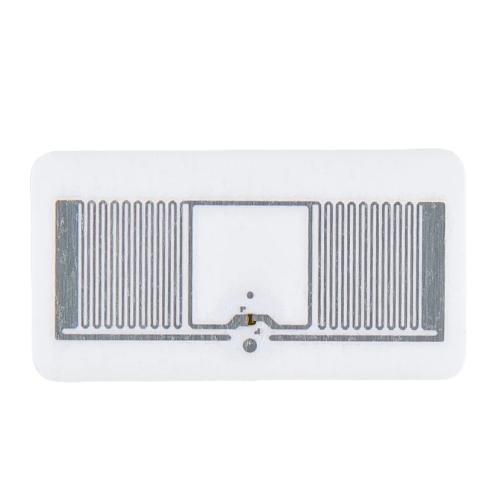
An RFID Inlay is the core electronic component of an RFID tag or label. It consists primarily of an RFID microchip connected to an antenna and mounted on a thin substrate material.
The microchip stores identification data, while the antenna enables wireless communication with an RFID reader.
When an RFID reader transmits radio frequency signals, the antenna receives the signal and enables the chip to communicate its stored information back to the reader.
RFID Inlays are generally considered semi-finished RFID components. They can be converted into finished products such as:
- RFID labels
- RFID retail hang tags
- RFID smart cards
- RFID wristbands
- RFID asset tracking tags
- NFC labels and smart packaging
The type of RFID Inlay selected depends on the application, operating frequency, required reading distance, product material, and environmental conditions.
How Do RFID Inlays Work?
RFID Inlays work through radio frequency communication between an RFID reader and an RFID chip.
In a typical passive RFID system, the process involves the following steps:
- Signal Transmission: The RFID reader sends radio frequency signals through its antenna.
- Signal Reception: The antenna inside the RFID Inlay receives energy from the reader.
- Chip Activation: The received energy activates the RFID chip in a passive inlay.
- Data Communication: The chip responds by communicating its stored identification information.
- Data Processing: The RFID reader receives the response and transfers the information to an RFID software system or connected application.
This process allows businesses to identify multiple tagged products without requiring direct line-of-sight scanning.
The actual reading distance depends on the RFID frequency, antenna design, chip sensitivity, reader power, tag orientation, and surrounding environment.
Main Components of RFID Inlays
An RFID Inlay consists of several essential components that work together to enable wireless identification.
1. RFID Microchip
The RFID microchip, also called an Integrated Circuit (IC), is responsible for storing identification information and handling communication with the RFID reader.
Depending on the chip model, it may support different memory capacities, security features, and communication protocols.
2. RFID Antenna
The antenna is a conductive element that receives radio frequency signals from the reader and enables communication with the chip.
RFID antennas are commonly manufactured using materials such as aluminum, copper, or conductive inks.
The antenna’s size, shape, material, and design influence the performance of the RFID Inlay.
3. Substrate Material
The substrate is the thin supporting layer on which the antenna and microchip are mounted.
Common substrate materials include:
- PET (Polyethylene Terephthalate)
- Paper
- Other flexible polymer films
The substrate provides mechanical support and helps maintain the structure of the RFID Inlay.
4. Chip-Antenna Connection
The electrical connection between the microchip and antenna is essential for proper RFID communication.
Specialized bonding techniques are used to connect the chip to the antenna. A reliable connection helps maintain consistent performance during manufacturing and product use.
Types of RFID Inlays
RFID Inlays are available in different types depending on their frequency, construction, and intended application.
1. UHF RFID Inlays
UHF (Ultra-High Frequency) RFID Inlays are widely used for inventory management, retail product identification, logistics, and supply chain tracking.
They are commonly associated with RAIN RFID technology and passive UHF RFID systems.
Key features:
- Suitable for bulk inventory identification.
- Supports relatively long reading distances.
- Enables fast identification of multiple items.
- Commonly used in retail and warehouse operations.
Applications include retail inventory management, logistics, manufacturing, and asset tracking.
2. HF RFID Inlays
HF (High-Frequency) RFID Inlays generally operate at 13.56 MHz.
They are commonly used in applications requiring short-range communication and controlled identification.
Key features:
- Shorter reading distance than typical UHF systems.
- Suitable for contactless identification.
- Supports applications such as smart cards and ticketing.
- Available in different antenna designs.
Common applications include access control, library systems, smart cards, and certain industrial identification systems.
3. NFC Inlays
NFC (Near Field Communication) Inlays are based on high-frequency RFID technology and typically operate at 13.56 MHz.
They enable short-range communication between compatible NFC devices, including many smartphones.
Key features:
- Smartphone compatibility.
- Short-range wireless communication.
- Suitable for interactive product experiences.
- Useful for product authentication and consumer engagement applications.
Common applications include smart packaging, promotional labels, product information sharing, and contactless interactions.
Dry RFID Inlay vs Wet RFID Inlay
One of the most common classifications of RFID Inlays is based on their physical construction and adhesive backing.
Dry RFID Inlay
A Dry RFID Inlay generally consists of an RFID chip and antenna mounted on a substrate without a pressure-sensitive adhesive backing.
These inlays are commonly supplied in rolls and are used by label converters and manufacturers who integrate them into finished RFID products.
Key characteristics:
- No pressure-sensitive adhesive backing.
- Suitable for further label conversion.
- Used in RFID labels and smart product manufacturing.
- Requires an appropriate integration or bonding process.
Wet RFID Inlay
A Wet RFID Inlay contains an adhesive layer and release liner, making it easier to attach to different surfaces.
It is commonly used in applications where the inlay needs to be applied directly to a product or integrated into a label.
Key characteristics:
- Includes an adhesive backing.
- Easy to apply to compatible surfaces.
- Available in different sizes and designs.
- Suitable for RFID label production and product identification.
Difference Between Dry and Wet RFID Inlays
| Feature | Dry RFID Inlay | Wet RFID Inlay |
|---|---|---|
| Adhesive | No pressure-sensitive adhesive | Adhesive included |
| Release liner | Generally absent | Generally included |
| Application | Further conversion | Direct application or label conversion |
| Handling | Requires integration | Easier to attach |
| Common use | Label manufacturing | RFID labels and product tagging |
The right option depends on the manufacturing process, application requirements, and attachment method.
RFID Inlay Manufacturing Process
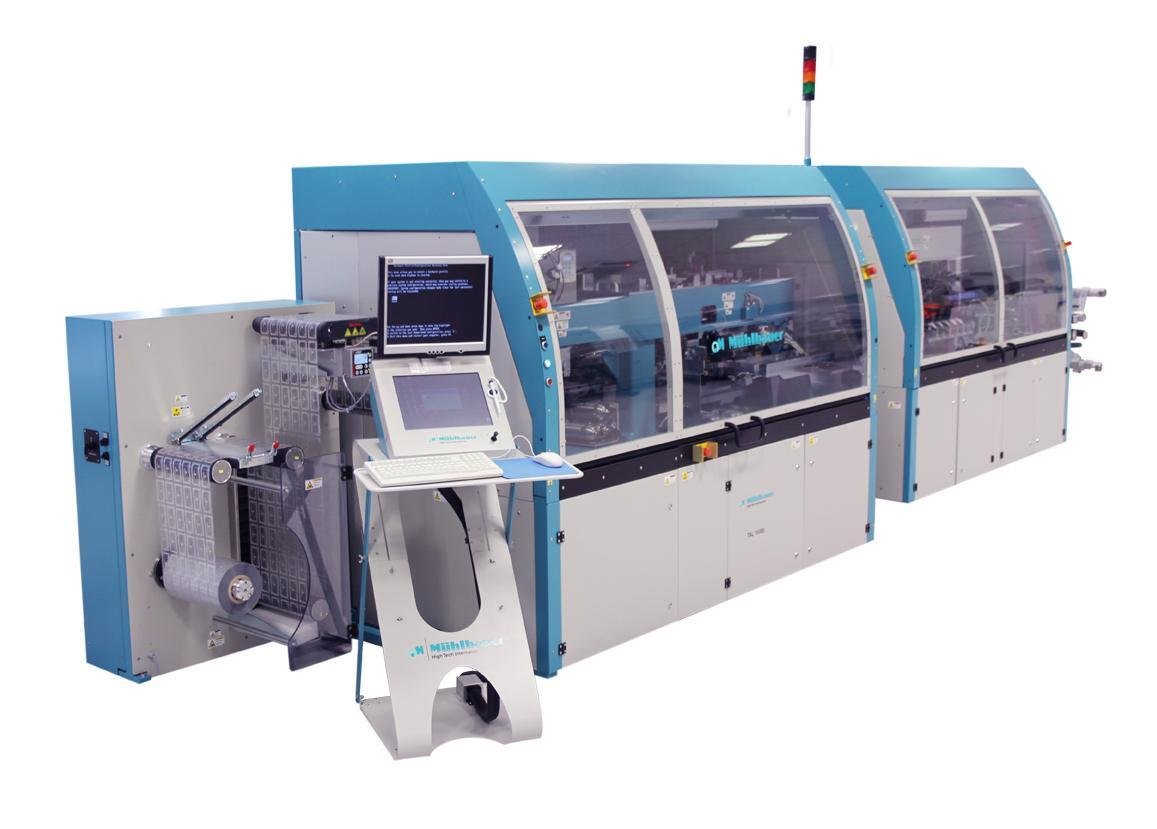
The manufacturing of RFID Inlays involves precision engineering, specialized equipment, and quality control procedures.
Although manufacturing methods vary depending on the technology and design, the typical production process includes the following stages.
Step 1: Antenna Design
The manufacturing process begins with designing the RFID antenna according to the required operating frequency, chip specifications, size, and application.
The antenna geometry plays an important role in determining the communication performance of the RFID Inlay.
Step 2: Antenna Manufacturing
The antenna is produced on a suitable substrate using manufacturing techniques such as:
- Aluminum or copper etching.
- Metal stamping.
- Conductive ink printing.
The selected process depends on the antenna design, production volume, and required specifications.
Step 3: RFID Chip Attachment
The RFID microchip is attached to the designated antenna connection points using specialized chip bonding equipment.
Precision is essential during this stage because incorrect alignment or an unreliable electrical connection can affect the performance of the inlay.
Step 4: Electrical Connection and Bonding
The chip and antenna are connected using suitable bonding materials and techniques.
The objective is to establish a reliable electrical connection that supports consistent RFID communication.
Step 5: Lamination and Protection
Depending on the inlay design, additional protective layers may be applied to improve mechanical stability and protect sensitive components.
The material and construction depend on whether the product is being manufactured as a dry inlay, wet inlay, or another specialized format.
Step 6: Testing and Quality Inspection
Every manufacturing process should include appropriate quality checks.
Common inspection parameters include:
- Chip functionality.
- Antenna continuity.
- Electrical performance.
- Read sensitivity.
- Communication consistency.
- Physical defects and bonding quality.
Automated RFID testing equipment can help manufacturers identify defective inlays and maintain production consistency.
Step 7: Reel Winding and Packaging
After testing, RFID Inlays are generally converted into rolls or other specified formats.
The finished rolls are packaged according to customer requirements and are ready for further conversion into RFID labels, tags, or other products.
Applications of RFID Inlays Across Different Industries
RFID Inlays are used in multiple industries because they enable automated identification, inventory visibility, and product tracking.
1. Retail and Apparel
Retail businesses use RFID Inlays in product labels and hang tags to improve inventory accuracy and stock visibility.
Common applications include:
- Garment identification.
- Retail inventory management.
- Product tracking.
- Stock replenishment.
- Supply chain visibility.
2. Warehousing and Logistics
RFID Inlays help logistics companies and warehouses identify products, cartons, and packages.
They can support:
- Shipment tracking.
- Warehouse inventory management.
- Goods receiving and dispatch.
- Distribution centre operations.
- Asset identification.
3. Manufacturing Industry
Manufacturing facilities use RFID technology to identify components, monitor work-in-progress items, and track production assets.
RFID Inlays can be integrated into suitable tags and labels for automated identification.
4. Healthcare and Pharmaceuticals
RFID-enabled labels and tags can help healthcare organizations identify medical supplies, pharmaceutical products, and equipment.
Potential applications include:
- Medical equipment tracking.
- Pharmaceutical identification.
- Inventory monitoring.
- Supply management.
5. Libraries and Document Management
HF RFID Inlays are commonly used in library identification systems.
They help libraries manage books, track issued items, and automate borrowing and return operations.
6. Smart Packaging and Product Authentication
RFID and NFC Inlays can be integrated into smart packaging to support product identification, consumer interaction, and authentication-related applications.
Their functionality depends on the chip capabilities and the software platform used.
Benefits of Using RFID Inlays
RFID Inlays offer several advantages for businesses implementing automated identification systems.
1. Improved Inventory Accuracy
RFID technology helps businesses identify and track inventory with less dependence on manual scanning.
2. Faster Identification
Multiple compatible RFID tags can be identified within a reader’s field, improving operational efficiency.
3. Flexible Integration
RFID Inlays can be integrated into labels, hang tags, cards, packaging, and other compatible products.
4. Reduced Manual Operations
Automated identification can reduce repetitive manual data entry and scanning activities.
5. Better Supply Chain Visibility
RFID-enabled products can help businesses improve tracking and visibility across different stages of the supply chain.
6. Scalable Identification Solutions
Businesses can implement RFID systems across individual locations or larger operations depending on their requirements.
How to Choose the Right RFID Inlay?
Selecting the right RFID Inlay is important for achieving reliable performance and efficient RFID implementation.
Before purchasing RFID Inlays, consider the following factors:
1. Operating Frequency
Determine whether your application requires UHF, HF, or NFC technology.
UHF is generally suitable for inventory and logistics, while HF and NFC are commonly used for short-range identification.
2. Chip Specifications
Check the chip model, memory capacity, supported features, and compatibility with your RFID readers and software.
3. Antenna Design and Size
The antenna must be suitable for the product dimensions, operating frequency, and required reading performance.
4. Application Environment
Consider whether the RFID Inlay will be attached to paper, plastic, fabric, packaging, or another material.
For metal or liquid-rich environments, specialized antenna designs or suitable tag constructions may be necessary.
5. Dry or Wet Construction
Choose between dry and wet RFID Inlays depending on the label conversion process and adhesive requirements.
6. Read Performance
Evaluate reading performance under actual operating conditions instead of relying only on theoretical read-range specifications.
7. Quality and Testing
Choose a manufacturer that follows consistent manufacturing and testing procedures.
8. Supply Capacity and Customization
Consider production capacity, delivery consistency, technical support, and the ability to provide customized RFID Inlay specifications.
What Factors Affect RFID Inlay Price?
The price of RFID Inlays depends on several technical and commercial factors.
Important pricing factors include:
- RFID chip brand and model.
- Antenna material and design.
- Inlay dimensions.
- Operating frequency.
- Dry or wet construction.
- Order quantity.
- Customization requirements.
- Testing and quality specifications.
- Packaging and delivery requirements.
For accurate pricing, businesses should share their application details, technical specifications, and required order quantity with an RFID Inlay manufacturer or supplier.
Why Choose a Reliable RFID Inlay Manufacturer?
Choosing an experienced RFID Inlay manufacturer is important for maintaining consistent product quality and dependable supply.
A reliable manufacturer should offer:
- Consistent chip and antenna integration.
- Suitable RFID frequency options.
- Multiple inlay sizes and configurations.
- Manufacturing quality control.
- Performance testing.
- Customization support.
- Reliable production and delivery capabilities.
Businesses should evaluate manufacturers based on technical capabilities, product specifications, testing processes, and their ability to meet application-specific requirements.
Frequently Asked Questions About RFID Inlays
1. What is an RFID Inlay?
An RFID Inlay is the core component of an RFID tag or label. It consists of a microchip connected to an antenna and mounted on a substrate, enabling wireless identification through radio frequency communication.
2. What are the different types of RFID Inlays?
The major types include UHF RFID Inlays, HF RFID Inlays, NFC Inlays, Dry RFID Inlays, and Wet RFID Inlays. They differ in operating frequency, construction, and applications.
3. What is the difference between an RFID Inlay and an RFID Tag?
An RFID Inlay is the electronic core consisting of a chip and antenna. An RFID Tag is a more complete product that incorporates the inlay with additional materials such as adhesive, face stock, protective layers, or an enclosure.
4. What is the difference between Dry and Wet RFID Inlays?
Dry RFID Inlays generally do not include pressure-sensitive adhesive, whereas Wet RFID Inlays include an adhesive backing and release liner for easier attachment.
5. What is a UHF RFID Inlay?
A UHF RFID Inlay operates in the Ultra-High Frequency range and is commonly used for retail inventory management, logistics, warehousing, and asset tracking.
6. What materials are used in RFID Inlays?
RFID Inlays commonly use aluminum or copper antennas, silicon microchips, and flexible substrates such as PET or paper. Material selection depends on the design and intended application.
7. Can RFID Inlays be customized?
Yes. RFID Inlays can be customized according to antenna dimensions, chip specifications, operating frequency, substrate material, and application requirements, subject to manufacturing capabilities.
8. How much do RFID Inlays cost?
RFID Inlay prices vary according to chip type, antenna design, size, material, construction, order quantity, and customization. Businesses should request a quotation based on their technical requirements.
9. Which RFID Inlay is best for retail inventory management?
UHF RFID Inlays are commonly preferred for retail inventory management because they support fast identification of multiple products and are suitable for many inventory tracking applications.
10. How do I choose an RFID Inlay supplier?
Evaluate the supplier’s manufacturing capabilities, chip and antenna options, quality testing procedures, customization support, production capacity, and delivery reliability.
Conclusion
RFID Inlays are an essential component of modern RFID identification systems. By combining a microchip, antenna, and substrate, they enable wireless communication and provide the foundation for RFID labels, retail hang tags, smart cards, and asset tracking products.
Understanding the different types of RFID Inlays, their components, manufacturing processes, and applications helps businesses make informed purchasing decisions.
Whether you need UHF RFID Inlays for retail inventory, HF RFID Inlays for identification systems, or NFC Inlays for smart packaging, selecting the right specifications and a reliable manufacturer is essential for achieving consistent performance.

)
No comment