
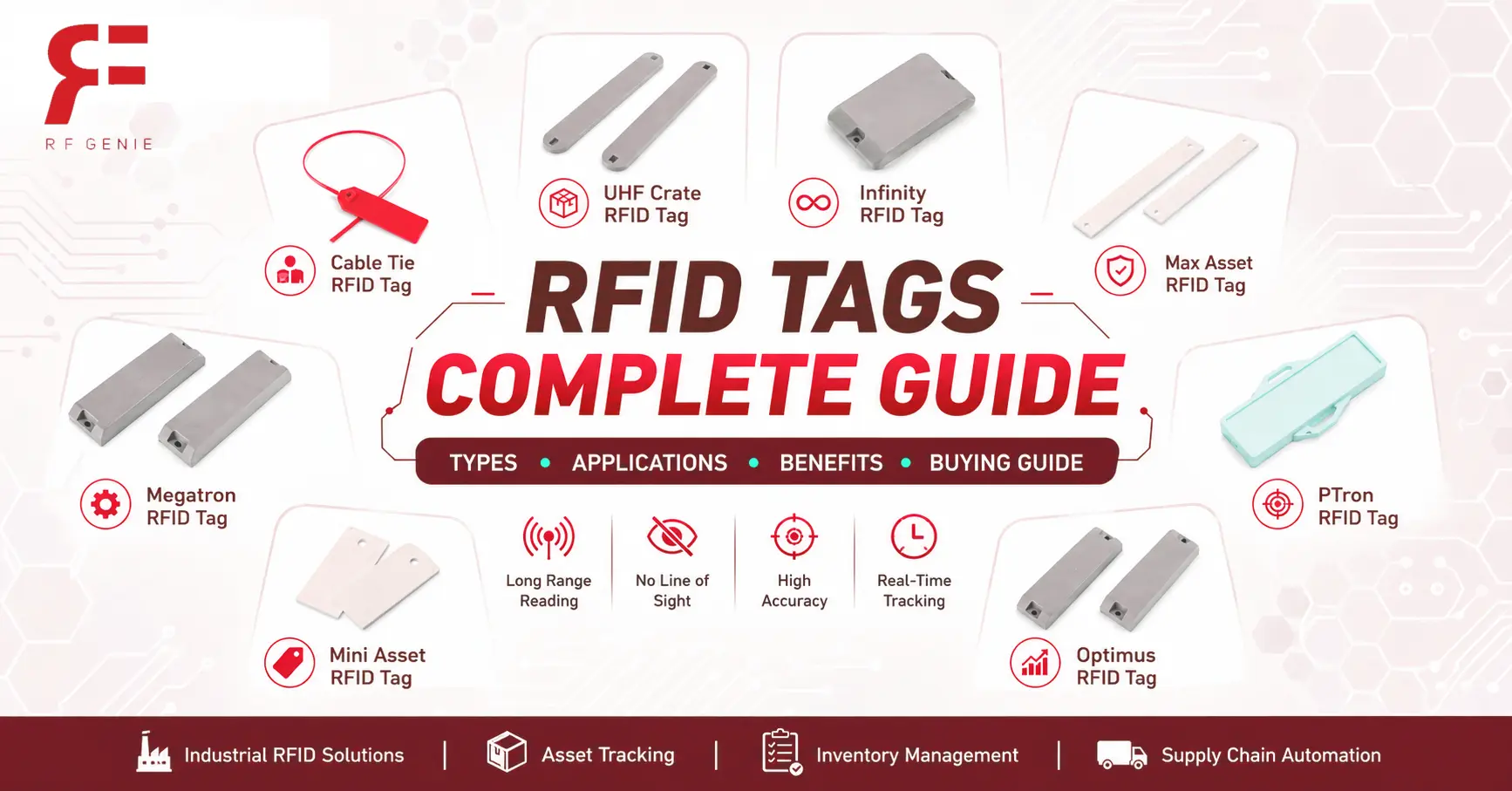
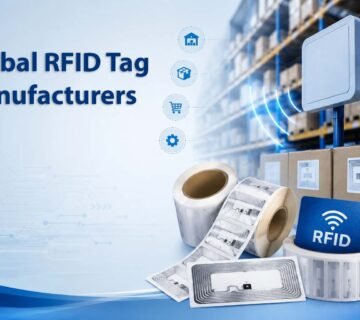
RFID Tags have transformed the way businesses identify, track, and manage assets across industries. From retail inventory management and warehouse automation to manufacturing, healthcare, logistics, and supply chain management, RFID technology has become one of the most efficient solutions for real-time asset visibility.
Unlike traditional barcode systems, RFID Tags do not require direct line-of-sight scanning. Multiple items can be identified simultaneously, making inventory management faster, more accurate, and highly efficient.
Whether you’re a manufacturer, retailer, warehouse operator, or system integrator, understanding RFID Tags is essential for improving operational efficiency and reducing manual errors.
In this complete guide, you’ll learn everything about RFID Tags, including how they work, their different types, applications, advantages, frequencies, and how to choose the right RFID solution for your business.
What are RFID Tags?
RFID Tags (Radio Frequency Identification Tags) are smart electronic devices used to identify, track, and manage products, equipment, inventory, and assets using radio waves.
Every RFID Tag contains a microchip and an antenna that communicate wirelessly with an RFID Reader. Unlike barcodes, RFID Tags do not require physical contact or direct visibility for scanning.
This allows businesses to automate inventory tracking, improve accuracy, and reduce operational costs.
Today, RFID Tags are widely used in:
- Retail
- Apparel Industry
- Manufacturing
- Automotive
- Logistics
- Warehouses
- Healthcare
- Asset Tracking
- Libraries
- Supply Chain Management
As industries move toward automation and Industry 4.0, RFID technology has become an essential part of digital transformation.
How Do RFID Tags Work?
RFID technology operates through wireless communication between three primary components:
- RFID Tag
- RFID Reader
- RFID Software/System
The process is simple yet highly efficient.
Step 1
An RFID Reader emits radio frequency signals.
↓
Step 2
The RFID Tag enters the reader’s communication range.
↓
Step 3
The antenna inside the RFID Tag receives the radio signal.
↓
Step 4
The microchip sends its unique identification data back to the reader.
↓
Step 5
The RFID Reader transfers this information to the software for processing.
↓
Step 6
The software updates inventory, tracks assets, or triggers automated workflows.
This entire process happens within milliseconds, making RFID one of the fastest identification technologies available today.
Components of RFID Tags
Every RFID Tag consists of three essential components.
1. RFID Microchip
The microchip stores unique identification information and product-specific data.
Functions include:
- Product Identification
- Asset Tracking
- Data Storage
- Authentication
- Security
2. RFID Antenna
The antenna receives and transmits radio signals between the RFID Reader and the tag.
Different antenna designs are available depending on:
- Reading Distance
- Frequency
- Industry
- Environment
3. Protective Material
Depending on the application, RFID Tags can be manufactured using:
- Paper
- PET
- PVC
- ABS Plastic
- Ceramic
- Flexible Labels
- Metal-compatible Materials
This allows RFID Tags to perform efficiently in both indoor and outdoor environments.
Types of RFID Tags
Selecting the right RFID Tag depends on the application, reading distance, environmental conditions, and industry requirements.
Passive RFID Tags
Passive RFID Tags do not contain an internal battery. They receive power directly from the RFID Reader.
Features
- Low Cost
- Long Life
- Maintenance-Free
- Lightweight
- High-Speed Reading
Applications
- Retail
- Inventory Management
- Warehouse Tracking
- Apparel
- Libraries
- Logistics
Types of RFID Tags
RFID Tags are available in different types based on their power source, frequency, material, and application. Choosing the right RFID Tag depends on factors such as read range, environmental conditions, asset type, and industry requirements.
At RFGenie, we manufacture and supply a wide range of RFID Tags designed for retail, manufacturing, warehouse management, logistics, healthcare, and industrial automation.
Passive RFID Tags
Passive RFID Tags are the most widely used RFID Tags across industries. These tags do not contain an internal battery. Instead, they receive power from the electromagnetic signal transmitted by an RFID Reader.
Key Features
- Cost-effective for large-scale deployment
- Lightweight and compact
- Maintenance-free operation
- Long service life
- Fast and accurate data capture
- Suitable for high-volume inventory tracking
Common Applications
- Retail inventory management
- Apparel and garment tracking
- Warehouse inventory
- Library management
- Asset tracking
- Logistics and supply chain
UHF RFID Tags
UHF (Ultra High Frequency) RFID Tags operate between 860–960 MHz and provide long reading distances, making them ideal for inventory and warehouse applications.
Advantages of UHF RFID Tags
- Long read range (up to 10–15 meters depending on the environment)
- Simultaneous reading of hundreds of tags
- High-speed inventory counting
- Excellent warehouse performance
- Ideal for pallet and carton tracking
Industries Using UHF RFID Tags
- Warehousing
- Retail chains
- Manufacturing
- Automotive
- Logistics
- Distribution centers
-
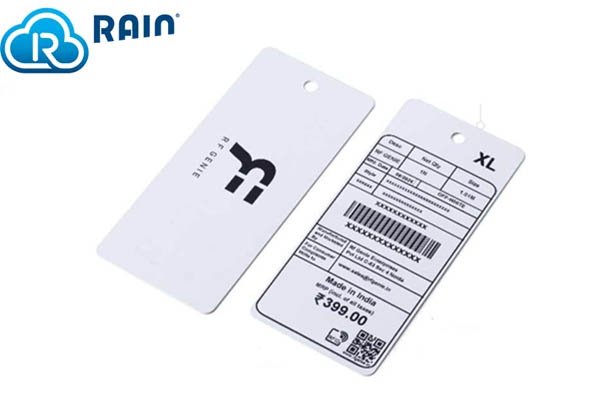
UHF Hang Tag 10245 – rfgenie
Download Datasheet -
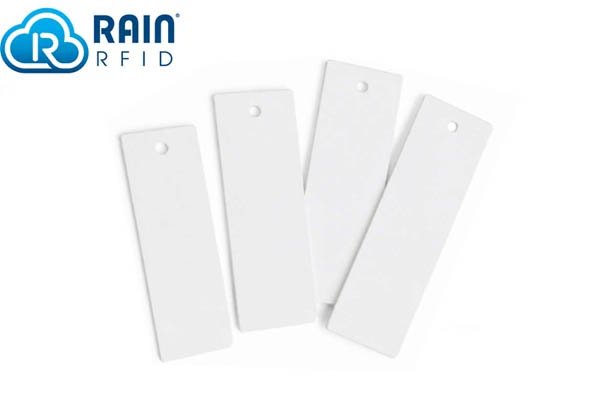
UHF Hang Tag 8325 rfgenie
Download Datasheet -
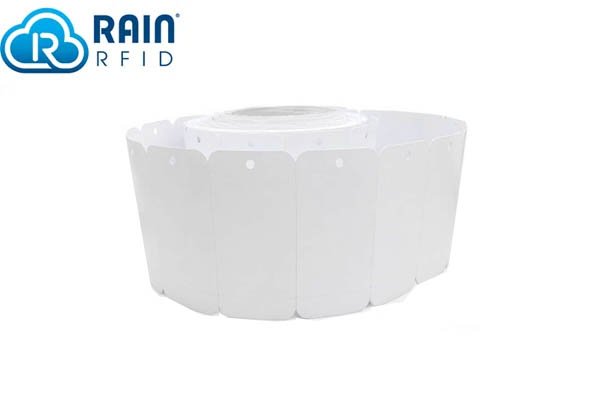
UHF Hang Tag 9648 – Roll
Download Datasheet -
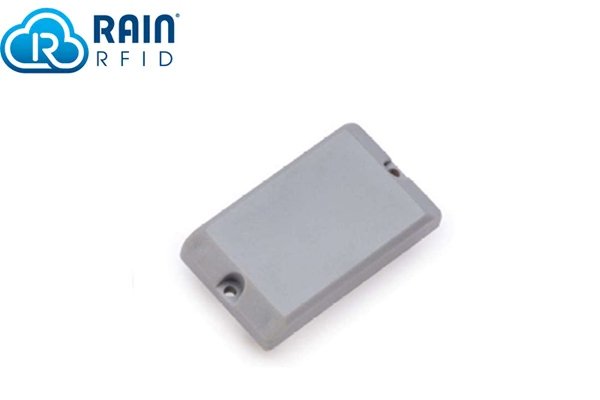
UHF Infinity Tag for Long Range RFID Asset Tracking
Download Datasheet -
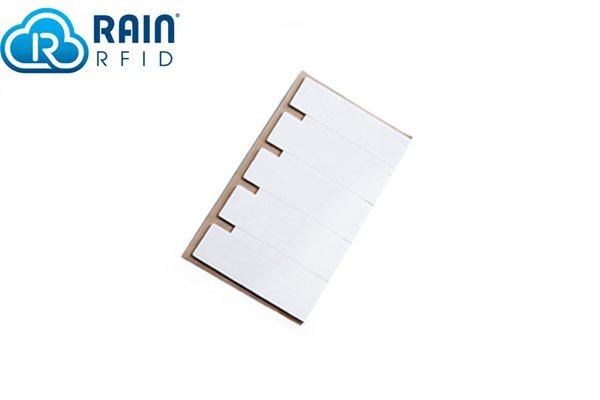
Max-On Metal UHF Label for Metal Asset Tracking
Download Datasheet -

RFID Printer – Zebra ZT400 series industrial RFID Printer
Download Datasheet -
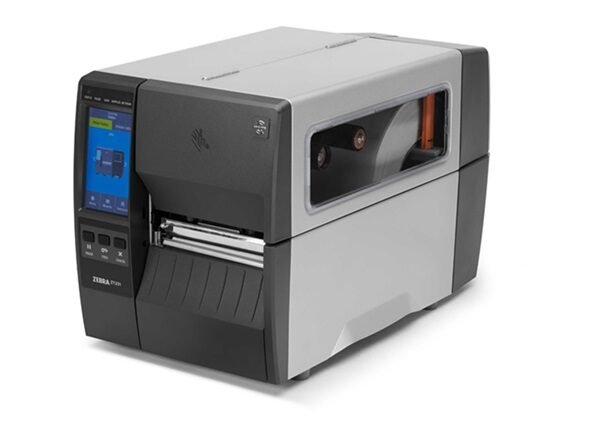
RFID Printer – Zebra ZT231 Series Industrial RFID Printer
Download Datasheet -
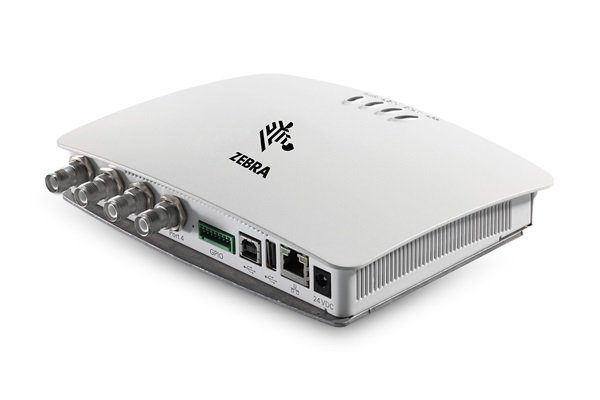
Zebra FX7500 RFID UHF Fixed Reader for Industrial Tracking
Download Datasheet
Ask about product or Report an issue
HF RFID Tags
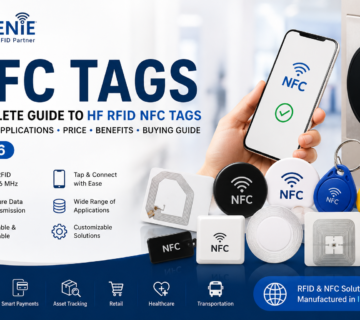
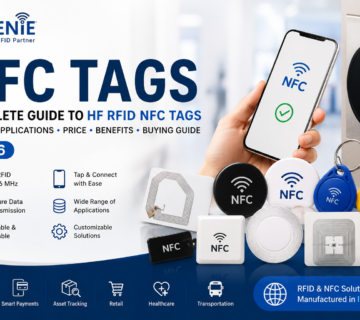
HF (High Frequency) RFID Tags operate at 13.56 MHz and are known for secure and reliable short-range communication.
Benefits
- Stable communication
- Better performance near liquids
- High data security
- Reliable authentication
Applications
- Smart cards
- Access control
- Library systems
- Healthcare
- Manufacturing processes
Benefits of RFID Tags
Businesses worldwide are replacing manual tracking systems with RFID because it improves efficiency, visibility, and accuracy.
Faster Inventory Management
Thousands of items can be scanned within minutes without opening cartons or manually checking each product.
Improved Accuracy
RFID minimizes human error by automatically identifying products and assets.
Real-Time Tracking
Track inventory movement, warehouse stock, and business assets in real time.
Reduced Operational Costs
Automation reduces labor costs, stock discrepancies, and inventory losses.
Better Supply Chain Visibility
RFID enables end-to-end product tracking from manufacturing to delivery.
Enhanced Customer Experience
Retailers can ensure product availability and reduce stock-outs through accurate inventory management.

No comment